







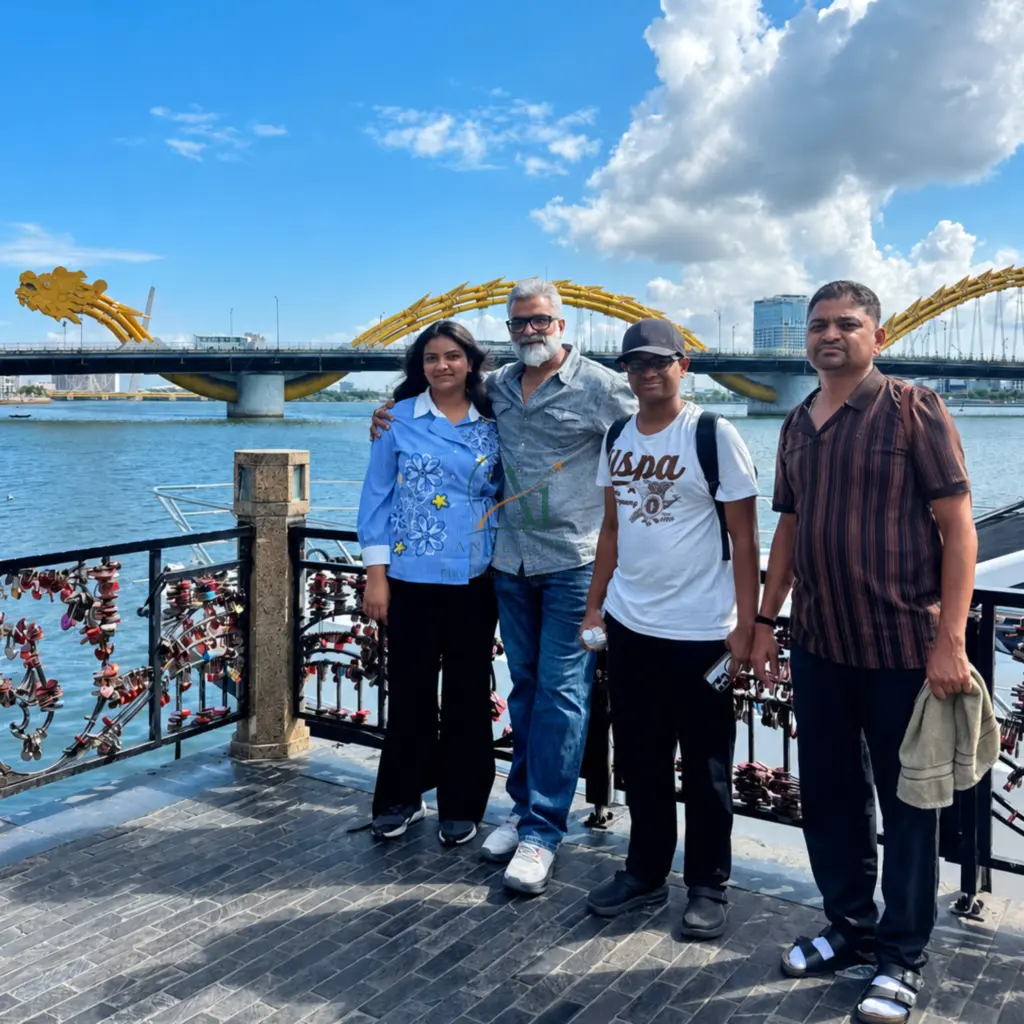

Da Nang Morning City Tour
Da Nang is an easy city to visit, but it is surprisingly easy to plan badly.
For many first-time visitors, the problem is not finding enough things to do. It is trying to do too many of them. A three- or four-day itinerary can quickly fill up with pagodas, Marble Mountains, Hoi An, Ba Na Hills, beaches, cafés, markets, food tours and day trips. On paper, that looks efficient. In reality, it can mean early starts, long drives, too much walking and very little time to actually enjoy the city.
A better first trip to Da Nang is usually built around a few priorities, some local food, enough free time to slow down and enough flexibility to change plans when the weather, your energy or your interests change.
The most useful question is not simply, “What should I see in Da Nang?”
It is:
“What kind of Da Nang trip do I actually want?”
Da Nang First-Time Visitor: Quick Planning Guide
| If you want… | Prioritize | Avoid overdoing |
|---|---|---|
| A relaxed first trip | Da Nang itself, Linh Ung Pagoda, local food and free time | Too many day trips |
| Culture and history | Marble Mountains, Hoi An and a few meaningful cultural stops | Trying to see every famous site |
| Local experiences | Food, markets, traditional crafts and local hosts | Experiences that are only “local” in name |
| Family or senior travel | Fewer stops, private transport and longer breaks | Walking-heavy schedules |
| Easy independent travel | Grab, cafés, restaurants and self-guided city time | Paying for a guide when you only need transport |
| A longer stay | Neighborhoods, food, beach routines and occasional trips | Treating every day like a sightseeing day |
Don’t Try to “Complete” Da Nang
One of the most common mistakes first-time visitors make is treating Da Nang like a checklist.
It is easy to feel that you need to see everything because so many destinations are close together. Son Tra can be combined with the city center. Marble Mountains can be paired with Hoi An. Ba Na Hills takes a full day. Hue is often sold as another day trip. Suddenly, a short holiday becomes a sequence of transfers and timed stops.
You may technically see more, but that does not necessarily mean you experience more.
Da Nang works well when you leave some space in the itinerary. An early beach walk, a long local lunch, a Vietnamese coffee break or an evening with no plan can be as memorable as another attraction. The city is comfortable enough that you do not need to turn every free hour into sightseeing.
If you are traveling with children, parents or seniors, this becomes even more important. Heat, stairs, waiting time and traffic can make a schedule that looks reasonable on Google Maps feel much more tiring in real life.
For most travelers, a better rule is simple: choose fewer things and give them more time.
Decide What Kind of Trip You Want Before Choosing Attractions
There is no single “perfect Da Nang itinerary” because travelers come here for very different reasons.
Some people want beaches and relaxation. Some care most about Vietnamese food. Others use Da Nang as a comfortable base for exploring Central Vietnam. Some want history, photography, nightlife or local culture. Others simply want a few easy days somewhere pleasant.
That difference should shape the itinerary.
If you want a relaxing trip, there is no reason to fill every day with tours. If food is one of the main reasons you are visiting Vietnam, leave meals free instead of booking every lunch as part of a package tour. If you are curious about culture, prioritize experiences that offer context or interaction rather than adding more photo stops.
And if you are not interested in “immersive” travel at all, that is also completely fine. You do not need to prove that you traveled well by spending every day in markets, villages or workshops. A beach, a good hotel, seafood and several slow mornings can be exactly the right trip.
The best itinerary is not the one that includes the most famous places. It is the one that matches your travel style.
Three Places That Make Sense on a First Visit
You do not need a long list of attractions to get a good introduction to Da Nang. Three places are enough to give you a useful mix of nature, culture, walking and regional atmosphere.
Linh Ung Pagoda and Son Tra Peninsula

Linh Ung Pagoda is one of the easiest places to understand Da Nang’s relationship with the sea, mountains and Buddhist culture. The Lady Buddha statue is the obvious landmark, but the wider setting matters just as much. From the peninsula, you can look back toward the city and coastline and get a much better sense of Da Nang’s geography.
Do not treat it as a five-minute photo stop. Walk around, take in the view and leave enough time to enjoy the atmosphere.
Son Tra is also a natural area rather than a theme park. Monkeys and the endangered red-shanked douc langur live here. If you see wildlife, keep your distance, do not feed the animals and do not approach them for photographs.
Marble Mountains

Marble Mountains is worth visiting if you are interested in caves, pagodas, religious history and viewpoints.
What some first-time visitors underestimate is the physical effort involved. There are stairs, uneven areas and sections that can feel much harder in hot or humid weather than expected.
If you are traveling with older family members or anyone with limited mobility, do not treat Marble Mountains as a quick stop squeezed between several other attractions. Allow more time, avoid the hottest part of the day and be realistic about how much walking your group wants to do.
Hoi An
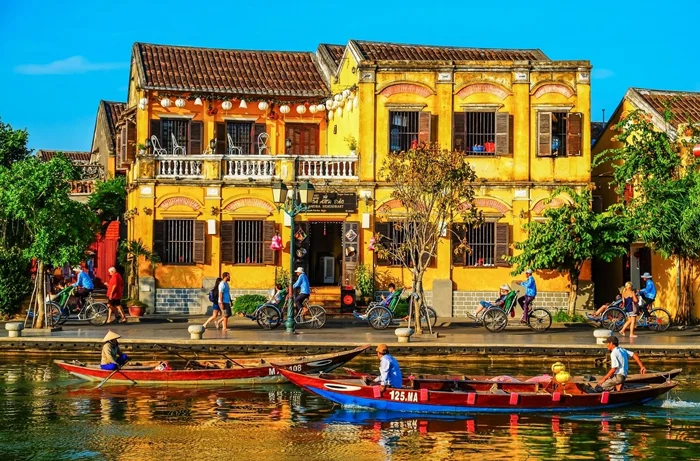
Hoi An is close enough to Da Nang that many travelers visit without changing hotels.
For a first visit, late afternoon into evening works well. You can walk through the Old Town, eat dinner, enjoy the riverfront atmosphere after dark and return to Da Nang later that evening.
There is no need to “complete” every attraction in Hoi An either. For many visitors, the pleasure is simply walking, eating and slowing down.
If you want a deeper experience, staying overnight can be worthwhile, especially if you would like to see the town before and after the busiest visitor periods.
A Famous Attraction Is Not Automatically a Must-See
Popularity and suitability are not the same thing.
Ba Na Hills is a useful example. Many travelers first discover it through photographs of the Golden Bridge and assume they are going to a mountain viewpoint or cultural landmark. In reality, Ba Na Hills is a large entertainment complex with cable cars, themed architecture, restaurants, shows and amusement areas.
Some people love it. Others arrive expecting something completely different and leave disappointed.
The larger lesson is more important than the attraction itself: before adding any famous place to your itinerary, understand what the experience actually is.
Ask yourself whether it matches your interests, how much of the day it will take, how weather-dependent it is and what you will have to give up in order to visit it.
A place can be popular and still not be right for your trip.
You Don’t Need a Tour for Everything
Da Nang is one of the easier cities in Vietnam to explore independently.
Grab works well for many simple trips. You can use it for restaurants, cafés, markets, beaches and many sightseeing stops without needing anyone to organize the day for you.
A local guide becomes more valuable when they provide something beyond transport: cultural context, history, local food knowledge, easier communication, flexible pacing, help with family logistics or access to experiences that are difficult to arrange independently.
Grab vs Local Guide in Da Nang

Angel One Travel airport transfer van and passengers in Da Nang| What you need | Grab | Local guide |
|---|---|---|
| Simple A-to-B transport | ✓ | Usually unnecessary |
| Restaurant or café visit | ✓ | Usually unnecessary |
| Historical and cultural context | — | ✓ |
| Local food discovery | Limited | ✓ |
| Flexible family or senior itinerary | Limited | ✓ |
| Village or local-maker access | Limited | ✓ |
| Help adjusting plans around weather | You manage it | ✓ |
| Lowest transport cost | ✓ | — |
The simplest rule is this: use Grab when you mainly need transportation. Pay for a guide when knowledge, access or flexibility will genuinely improve the day.
A driver gets you from one place to another. A good guide should make the experience between those places more valuable.
Cheap Tours Can Cost You Time Instead of Money
A low tour price does not automatically mean a bad experience, but you should understand what you are buying.
One recurring frustration among travelers is discovering that a cheap sightseeing tour includes several retail stops, compulsory shopping visits or repeated attempts to sell optional activities. In that case, the real cost is not just money. It is your time.
Before booking, check whether shopping stops are compulsory, whether optional activities are truly optional, what kind of meal is included, how much walking is involved and whether the itinerary is realistic.
A tour with six or seven stops may look like better value than one with three, but it can also mean spending the entire day getting in and out of a vehicle.
Good value is not the same as low price. A good-value tour is one where you understand exactly what you are paying for and where your time goes.
Where You Stay Matters More Than “Beach or City”
Many first-time visitors choose accommodation by asking one question: beach area or city center?
That is useful, but not enough.
Da Nang is developing quickly, and construction can make two hotels only a few streets apart feel completely different. Traffic, tour buses, nightlife and room orientation can matter just as much as the broader neighborhood.
Read recent reviews instead of relying only on hotel photos or star ratings. Look specifically for comments about construction noise, road noise, nearby bars, building work and soundproofing.
If you are a light sleeper, ask which direction the room faces. That detail can sometimes matter more than being on a higher floor.
For longer stays, the immediate neighborhood also becomes more important. Being close to good food, cafés and everyday services may matter more than being directly beside a major attraction.
Weather Should Change Your Plan, Not Ruin the Trip
Da Nang’s weather can change the experience of the city very quickly.
A clear morning can make Son Tra beautiful. Heavy rain or low cloud can turn the same plan into a poor use of time. Beach days, mountain views and outdoor sightseeing are all weather-dependent.
The mistake is not visiting Da Nang during the rainy season. The mistake is building an itinerary with no flexibility.
Keep some activities movable. If the weather is poor, use that day for food, cafés, markets, indoor cultural stops or simply slowing down. Move the outdoor experience to a better day if possible.
In Central Vietnam, a flexible plan is often more useful than an extremely detailed one.
Traveling With Parents or Seniors? Plan Differently
A destination can look easy on a map and still involve much more effort than expected.
Marble Mountains has stairs. Hoi An involves extended walking. Hot weather makes both more tiring. Long transfers, toilet access and waiting time also matter more when traveling with older family members.
For senior-friendly travel, fewer stops are usually better. Private transportation, air-conditioned breaks, comfortable restaurants, predictable meal times and the ability to return early can make a major difference.
Do not build a family itinerary around the idea that you need to “finish” everything.
Three enjoyable places are better than seven exhausting ones.
Arrival days also deserve special attention. If your parents or grandparents have just finished an overnight flight, beginning immediately with a full sightseeing schedule may not be the best introduction to the trip.
Food Should Be Part of the Destination
Da Nang is a city where food can easily become one of the highlights of the trip.
Do not use every meal simply as fuel between sightseeing stops.
Try regional dishes such as mì Quảng, bánh tráng cuốn thịt heo, bún chả cá, bánh xèo and local seafood. More importantly, leave enough freedom to choose restaurants based on what you actually want to eat instead of where a fixed itinerary happens to stop.
This is another reason not to overplan. If every breakfast, lunch and dinner is attached to a tour, there is very little room left for discovery.
If you have allergies or dietary restrictions, communicate clearly before ordering. Fish sauce, shrimp paste, shellfish, peanuts and pork may appear in dishes even when they are not obvious from an English-language menu.
Food experiences are best when they help you understand the place, not simply feed a group quickly.
“Live Like a Local” — Only If You Actually Want To
“Live like a local” has become one of the most common phrases in travel marketing.
It can describe meaningful experiences, but it can also become another cliché.
Not every traveler wants cultural immersion. Some visitors simply want a comfortable hotel, a beach, good food and a few relaxed days. That is a perfectly valid reason to come to Da Nang.
And even for travelers who do want local experiences, not every ordinary activity becomes interesting just because somebody labels it “authentic.”
A worthwhile local experience should give you access, interaction or understanding that you would struggle to get alone. That might mean meeting a family that still practices a traditional craft, visiting a working market with someone who can explain it, learning how a regional food is made or spending enough time with a local host to have a real conversation.
The value is not simply being somewhere tourists usually do not go.
The value is understanding why that place, food or tradition matters.
Sometimes the Best Thing to Do Is Nothing
It can feel strange to travel a long way and intentionally leave a day empty.
But Da Nang is especially good for unstructured time.
Wake up early and walk along the beach. Have breakfast somewhere nearby. Stay in a café longer than planned. Get a massage. Go swimming. Take a slow ride along the coast. Find somewhere new for dinner.
Not every day needs to become a “travel experience.”
For travelers staying a week or longer, these everyday routines often become the most memorable part of the trip. You stop thinking only in terms of attractions and start discovering favorite cafés, breakfast stalls, beach entrances and neighborhoods.
That is when Da Nang begins to feel less like a checklist destination and more like a place.
Better Tourism Does Not Always Mean More Attractions
There is often an assumption that a destination becomes better when it builds more attractions.
That is not always true.
Better transport, cleaner beaches, walkability, waste management, nature protection and stronger public spaces can improve the visitor experience just as much as another theme park or photo destination.
The same principle applies to local and rural tourism.
Not every village needs to become a staged “tourist village.” Not every field needs an Instagram installation. Not every tradition needs to be turned into a performance.
Sometimes the best tourism experience is simply thoughtful access to something that already exists, while protecting the people, place and environment that made it interesting in the first place.
How Many Days Do You Actually Need in Da Nang?
There is no perfect number, but for most first-time visitors, three to five days is a comfortable starting point.
How Long Should You Stay in Da Nang?
| Length of stay | Recommended pace | Best approach |
|---|---|---|
| 2–3 days | Light | Da Nang + Hoi An + one main sightseeing experience |
| 4–5 days | Balanced | City, Hoi An, food, beach and one flexible day |
| 6–7 days | Slow | Use Da Nang as a base and avoid planning every day |
| 1 week+ | Very flexible | Explore neighborhoods, food and Central Vietnam gradually |
With two or three days, keep the itinerary simple. Focus on Da Nang itself, choose one or two major experiences and leave time for Hoi An if it interests you.
Four or five days is much more comfortable. You can combine sightseeing, local food, Hoi An and downtime while still having enough flexibility to move plans around if the weather changes.
If you are staying for a week or longer, stop thinking only in terms of attractions. Use Da Nang as a base, explore gradually and leave entire days open.
Build Your Itinerary Around Decisions, Not Attractions
A better way to plan your first trip is to start with four questions.
First, what are your two highest priorities? Beach and food? Culture and history? Family comfort? Photography? Local experiences? Relaxation?
Second, how much walking can your group comfortably handle? Be realistic, especially in hot weather.
Third, which plans depend on good weather? Keep those flexible.
Fourth, where would a local guide actually add value? Use independent transport for the rest.
A couple focused on food and relaxation might need only light sightseeing, one Hoi An evening and plenty of free time. A family traveling with older parents may prefer Linh Ung Pagoda, a good local lunch and one easy cultural stop rather than a packed full-day circuit.
A curious slow traveler might spend less time on major attractions and more time exploring food, traditional crafts, markets and neighborhoods.
There is no single correct itinerary.
There is only the itinerary that fits you.
Common First-Time Mistakes in Da Nang
Most disappointing Da Nang trips do not fail because someone missed a famous attraction.
They fail because the plan did not match the traveler.
The most common mistakes are trying to fit too much into too little time, underestimating walking and heat, booking an attraction without understanding what kind of experience it actually is, choosing a tour only because it is cheap, ignoring recent hotel reviews and assuming the weather will cooperate with a rigid schedule.
Another mistake is believing that there is only one “authentic” way to travel.
There is not.
You can spend a morning learning a traditional craft, or you can spend the same morning at the hotel pool. Both can be good travel decisions.
The important thing is knowing what you want before somebody else fills your itinerary for you.
Final Advice for First-Time Visitors
If you are visiting Da Nang for the first time, do less than you initially think you should.
Choose a few places that genuinely interest you. Keep part of your itinerary flexible. Use Grab when you only need transportation. Pay for a guide when local knowledge, access or flexibility will actually improve the day.
Read recent hotel reviews, especially for construction and noise. Plan more gently if you are traveling with children, parents or seniors. Leave meals free so you can explore local food. And do not feel that every day needs to be packed with sightseeing.
Some days can be cultural. Some can be active. Some can simply be easy.
Da Nang is a city where that balance works particularly well.
You do not need to complete it.
You just need enough time to enjoy it.
Need Help Planning Your Da Nang Trip?

Family visitors at Linh Ung Pagoda in Da NangIf you prefer a more flexible way to explore Da Nang without spending time coordinating transport, timings, restaurants, and multiple stops yourself, Angel One Travel can help you plan a trip around your actual travel style.
Choose from private Da Nang tours, local experiences, day trips, airport transfers, attraction tickets, or a custom itinerary designed around your schedule, group size, mobility, interests, and preferred pace.
We focus on helping travelers avoid unnecessary backtracking, overly rushed schedules, and compulsory shopping stops, so you can spend more time on the parts of Da Nang that matter most to you.
ANGEL ONE TRAVEL – YOUR LOCAL TRAVEL PARTNER IN DA NANG
Da Nang Tours · Private Tours · Local Experiences
Day Trips · Attraction Tickets · Airport Transfers · Hotels
Domestic & International Tours · Custom Itinerary Planning
Hotline / Zalo: +84 966 438 227
Address: 111/3 Nguyen Cong Tru Street, An Hai Ward, Da Nang City, Vietnam
Frequently asked questions
Helpful answers from Angel One Travel so you can check the essentials before planning your trip.
How many days should I spend in Da Nang?
Three to five days is a good starting point for most first-time visitors. Three days is enough for a basic introduction, while four or five days gives you more flexibility for Hoi An, local food, beach time and weather changes.
Do I need a tour in Da Nang?
No. Many places are easy to reach independently with Grab. A guide is most useful when you want local context, cultural knowledge, flexible pacing or access to experiences that are difficult to arrange yourself.
Is Grab enough for getting around Da Nang?
For many simple journeys, yes. Grab works well for restaurants, cafés, beaches, markets and point-to-point sightseeing. It becomes less useful when you need cultural interpretation, family logistics or a flexible multi-stop day.
Should I stay in Da Nang or Hoi An?
Da Nang is often the more practical base because of its beach, transport and wider range of accommodation. Hoi An is easy to visit from Da Nang, although staying overnight can be worthwhile if you want a slower Old Town experience.
What is the biggest mistake first-time visitors make in Da Nang?
Overplanning. Trying to visit every famous attraction often creates a tiring itinerary with little time left to actually enjoy the city.
Can I experience local life in Da Nang?
Yes, but look for experiences with genuine interaction, knowledge or access rather than something described as “local” simply because it happens outside the tourist center.