




Hoi An does not just preserve time through its moss-draped heritage houses or the magical glow of silk lanterns on a full moon night. The ancient town possesses another, far more vibrant and authentic heritage woven into its narrow alleys: its food.
As one of Southeast Asia’s most bustling trading ports in the 16th and 17th centuries, Faifo (the former name of Hoi An) was a melting pot of global cultures. Japanese, Chinese, and Western merchants brought their local produce and culinary habits here, blending them with indigenous Vietnamese and Champa traditions to create an incredibly unique flavor map. To “read” this edible chronicle, you don’t need a lavish banquet. The entire story is perfectly encapsulated in the three iconic dishes that define the soul of the ancient town: Cao Lau, Mi Quang, and Com Ga (Chicken Rice).
Cao Lau: A Unique Noodle Born from Water, Wood Ash, and Time
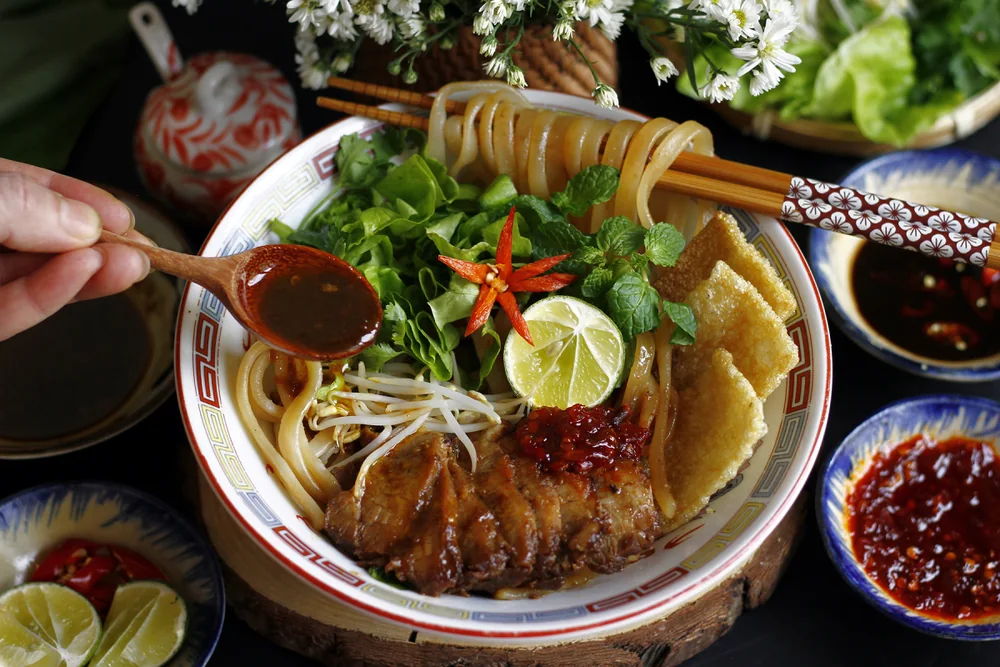
Authentic Hoi An Cao Lau with roast pork.
To visit Hoi An without trying Cao Lau is to miss the very essence of the town. The name “Cao Lau” (literally translating to “high floor”) is said to originate from the habits of wealthy merchants centuries ago. They would sit on the upper balconies of local eateries, sipping their noodles while keeping a watchful eye on their goods down by the riverbank.
What makes Cao Lau truly extraordinary is its extreme regional exclusivity. The noodles are nothing like Pho, Vermicelli, Japanese Udon, or Chinese egg noodles. To make authentic Cao Lau, fragrant rice must be soaked in lye water made from the ash of specific trees grown on the nearby Cham Islands. Then, the rice is stone-ground using water drawn exclusively from the millennia-old Ba Le Well—a sacred Champa well renowned for its crystal-clear, alum-free water. This bizarre marriage of fire (wood ash) and water (sacred well) results in a signature brownish-yellow noodle with a distinctively chewy texture and an earthy, smoky aroma.
Unlike other Vietnamese soups, Cao Lau doesn’t swim in broth. Instead, it is dressed with a rich, savory gravy reduced from the marinade of xa xiu (char siu-style roasted pork). A perfect bowl of Cao Lau is a harmony of golden noodles, tender slices of barbecue pork, crispy squares of pork crackling, and a spoonful of fiery local chili jam.
To taste this original flavor, you can visit Cao Lau Thanh—a rustic local favorite where the pork gravy is incredibly rich and flavorful. If you prefer an airy courtyard setting, Cao Lau Khong Gian Xanh (Green Space Cao Lau) is a fantastic choice, famous for its perfectly crunchy pork cracklings. Or, to relive the old-world atmosphere, step into Cao Lau Trung Bac, a decades-old eatery nestled right in the heart of the ancient town.
Mi Quang: The Generous and Free-Spirited Taste of the Countryside
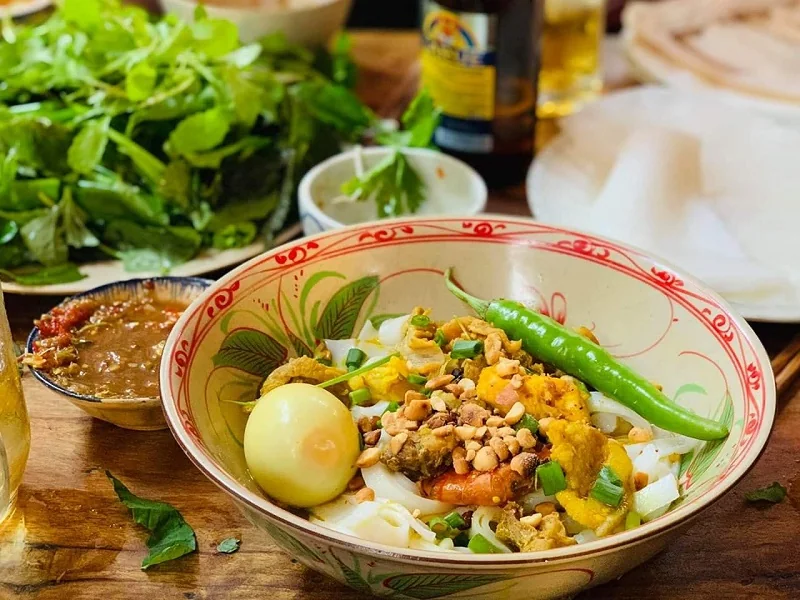
Mi Quang noodles with shrimp and rice paper.
While Cao Lau bears the aristocratic footprint of urban merchants, Mi Quang (Quang-style noodles) breathes the rustic, generous, and easygoing spirit of the local countryside.
Mi Quang doesn’t rely on massive pots of bone broth simmered overnight to achieve clarity. The soul of this dish is the “nuoc nhun”—an intensely concentrated, highly seasoned broth made from whatever the seasonal harvest provides (shrimp, pork belly, field crabs, snakehead fish, or even frogs).
The broth is poured just enough to barely cover the bottom of the bowl, lightly coating the thick, flat, and silky rice noodles. Eating Mi Quang is a sensory awakening: the vibrant yellow of turmeric, the deep red of caramelized shrimp, the nutty aroma of crushed roasted peanuts, and the satisfying crunch as you break pieces of crispy toasted rice paper directly into the bowl. Its “farm-to-table” flexibility has kept the dish intensely alive and beloved for centuries.
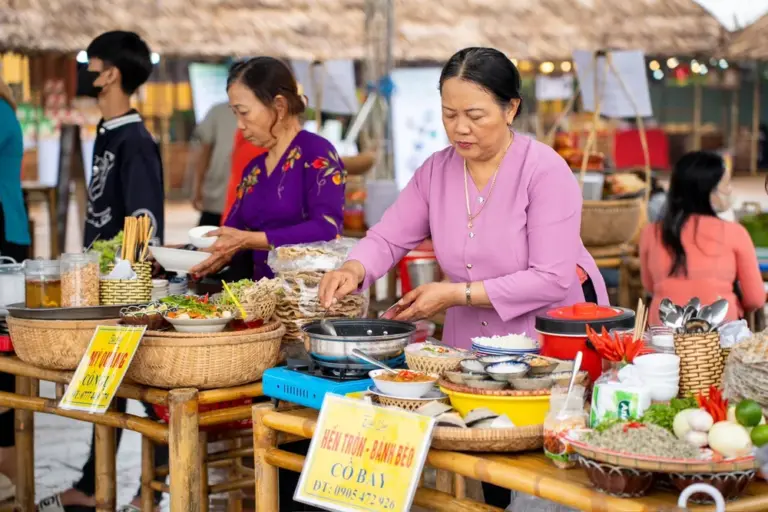
In Hoi An, foodies often whisper about Mi Quang Ong Hai, praised for its perfectly chewy noodles and deeply savory broth. For a more laid-back, street-food vibe, pull up a plastic stool at Mi Quang Di Hat—a humble street cart that is always packed thanks to its authentic, rustic flavor and incredibly budget-friendly prices.
Hoi An Chicken Rice (Com Ga): A Masterclass in Culinary Harmony
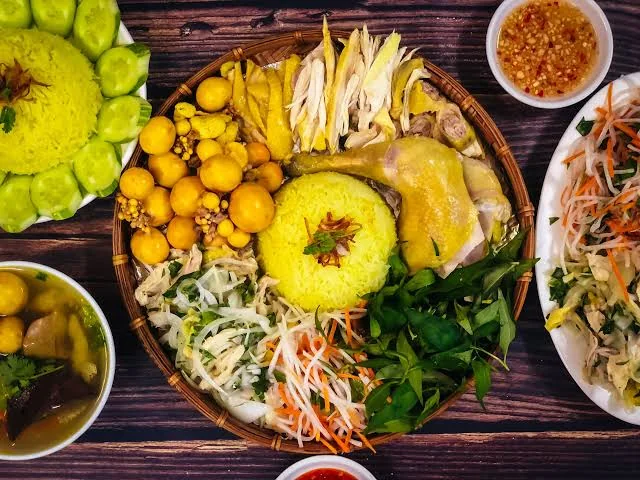
Hoi An Chicken Rice with shredded chicken salad.
When you hear “chicken rice,” Hainanese or Singaporean versions might come to mind. But Hoi An Chicken Rice has carved out its own brilliant path—delicate, sophisticated, and meticulously refined.
A stellar plate of Hoi An Com Ga begins with the rice itself. The grains are stir-fried with chicken fat and crushed garlic, then cooked in a rich, sweet chicken broth infused with turmeric, resulting in fluffy, golden, and incredibly flavorful rice. The meat must be from free-range chickens, ensuring a firm texture and thin, snappy skin. Rather than chopping the chicken into bone-in chunks, locals hand-shred the meat and toss it into a refreshing salad with ice-soaked onions, Vietnamese coriander (mint), black pepper, and a squeeze of lime.
The dish is always served with a small bowl of chicken soup featuring giblets, and a jar of Hoi An’s signature sweet-and-spicy chili jam on the side. The flawless balance of savory, sour, spicy, and rich makes Hoi An Chicken Rice an unforgettable culinary obsession.
Take a stroll down Phan Chu Trinh street, and you will easily spot the long lines of patient diners waiting outside the legendary Com Ga Ba Buoi, famous for its fluffy rice and perfectly balanced chicken salad. Just a few steps away is Com Ga Nga, which scores high marks for its cozy atmosphere and exceptional egg-drop chicken soup. If you want to eat like a true local, venture deep into an alley on Tran Hung Dao street to find Com Ga Xi, a compact but permanently crowded spot offering richly seasoned shredded chicken at a very local price.
The Final Puzzle Piece: The Magic of Tra Que Vegetable Village
Whether you are eating a bowl of Mi Quang on the sidewalk or a plate of Chicken Rice in a bustling restaurant, the dish instantly loses half its soul without the humble basket of fresh greens served on the side. In Hoi An, fresh herbs are never just a garnish; they are the ingredients that define the flavor profile.
Cao Lau demands the cooling bite of local mint and the slight tartness of thinly sliced banana blossoms. Mi Quang craves the spicy kick of baby mustard greens. And Com Ga is simply incomplete without the pungent aroma of Vietnamese coriander.
Almost all of these delicate, powerful flavors share the same birthplace: Tra Que Vegetable Village. Standing amidst the soft, porous soil fertilized with natural seaweed harvested from the Co Co River lagoon, you will quickly understand why these tiny green shoots possess the power to breathe life into every dish in this region.
Eating in Hoi An is an experience that requires patience. Pull up a low wooden stool on the pavement, squeeze a wedge of lime, crush a piece of rice paper, toss your steaming bowl of noodles, and chew slowly. In that moment, you are not just eating; you are tasting centuries of history meticulously wrapped into everyday ingredients by generations of Hoi An locals.
Final Thoughts: Bring the Soul of Hoi An into Your Own Kitchen
Enjoying Cao Lau, Mi Quang, or Com Ga at local eateries is the absolute best way to taste the cultural depth of Hoi An. But if you want this culinary story to go beyond the experience of a diner, why not try creating these flavors with your own hands?
Joining a Cooking Class in Hoi An takes you far deeper into the local rhythm of life. From wandering through a chaotic, vibrant traditional market at dawn to hand-picking fresh ingredients, all the way to standing at the stove, seasoning your own rich broth, or tossing a tangy chicken salad. It is far more than just learning a few new recipes; it is the most fulfilling way to bring a piece of Hoi An’s soul back to your family’s kitchen long after your journey ends.
If you are ready for a culinary adventure from the farm to the table, let us help you craft the most unforgettable experiences!
Plan Your Da Nang – Hoi An Trip with Angel One Travel
ANGEL ONE TRAVEL – YOUR LOCAL TRAVEL PARTNER
Da Nang Tours | Local Experiences | Private Tours
Day Trips Attraction Tickets | Hotels | Airport Transfers Domestic & International Tours
Custom Itinerary Planning
Hotline / Zalo: +84 966 438 227
Address: 111/3 Nguyen Cong Tru Street, An Hai Ward, Da Nang City, Vietnam